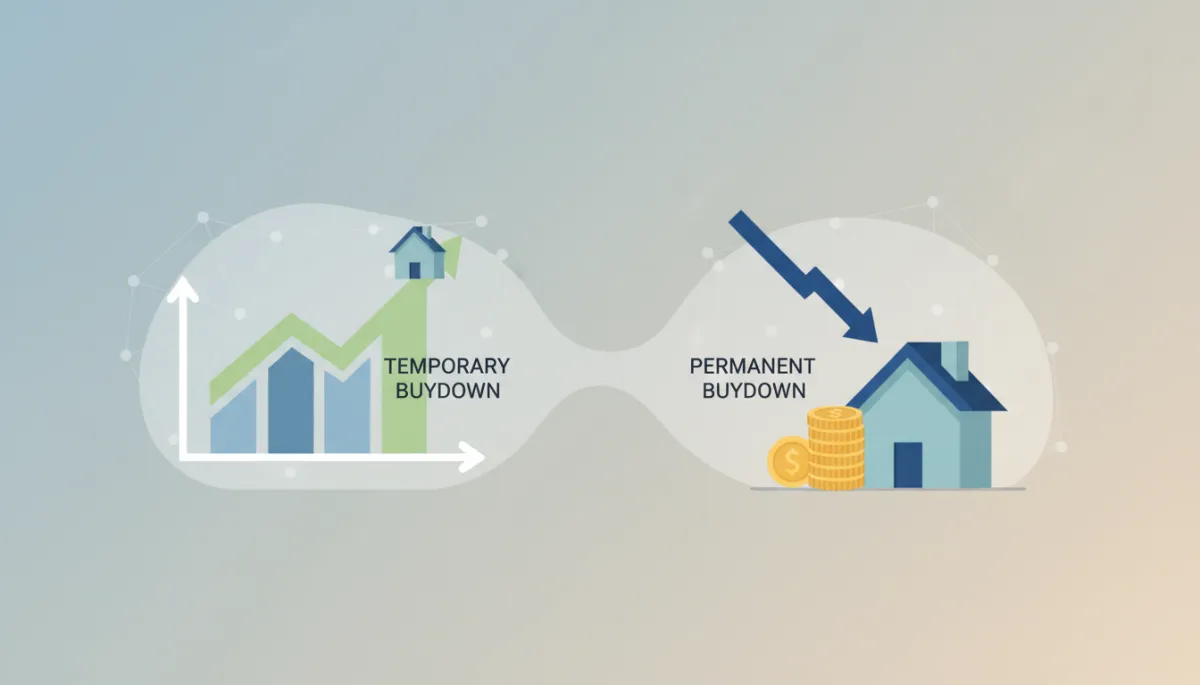
Temporary vs Permanent Buydowns: Affordable Mortgages
Mortgage, Buydown, Home Loans
Temporary vs Permanent Buydowns: How a Buydown Can Make Your Mortgage More Affordable
If you’ve been shopping for a home loan and keep hearing the word buydown, you’re not alone. Lenders, builders, and real estate agents are talking about temporary and permanent buydowns a lot right now, especially with interest rates higher than we were used to a few years ago. In this guide, I’ll walk you through what a buydown really is, how temporary vs permanent buydowns work, and how to decide which—if any—actually makes sense for you and your budget.
What Is a Buydown, Anyway?
Let’s start simple. A buydown is a way to temporarily or permanently lower your mortgage interest rate by paying extra money upfront. Think of it as prepaying some of the interest so that your monthly payment is lower, especially in the early years of the loan. The extra money usually comes from one of three places:
You as the buyer (out of pocket at closing)
The seller (as a seller credit or concession)
A builder or lender (as an incentive to make the payment more attractive)
No matter who funds it, the idea is the same: use a buydown to lower your monthly mortgage payment and make the home more affordable, especially when rates feel a little painful. Related terms you might hear are “mortgage rate buydown,” “interest rate buydown,” or “seller-paid buydown”—they all revolve around the same concept.
Temporary Buydown: Short-Term Relief, Long-Term Planning
A temporary buydown is exactly what it sounds like: your interest rate is reduced for the first few years of the loan, then it steps up to the full note rate. The most common versions are:
2-1 buydown – Your rate is 2% lower in year one, 1% lower in year two, then goes to the full rate in year three and beyond.
3-2-1 buydown – Your rate is 3% lower in year one, 2% lower in year two, 1% lower in year three, then hits the full rate after that.
Here’s how the math usually works behind the scenes. The lender calculates what your payment would be at the full note rate, then what it would be at the reduced rate during the buydown period. The difference in those payments is collected upfront and placed in a buydown account. Each month, money from that account “tops up” your payment so the lender still receives the full amount of interest due, while you enjoy the lower payment during the buydown years.
💡 Pro Tip: With a temporary buydown, your note rate never changes. Only your effective rate and payment change during the buydown period.
Permanent Buydown: Lower Rate for the Life of the Loan
A permanent buydown works differently. Instead of giving you a temporary discount, you pay discount points at closing to permanently reduce your interest rate for the entire term of the loan. One discount point typically costs 1% of your loan amount and might lower your rate by around 0.25%, though the exact impact depends on market conditions and lender pricing.
For example, if you’re borrowing $500,000, one point would cost $5,000. In exchange, your rate might drop from, say, 7.00% to 6.75%. If that lower rate saves you $150 per month, you can figure out your “break-even” time by dividing $5,000 by $150. In this simple example, you’d recoup the cost in about 33 months. If you plan to keep the loan longer than that, a permanent buydown can be a smart, long-term move.
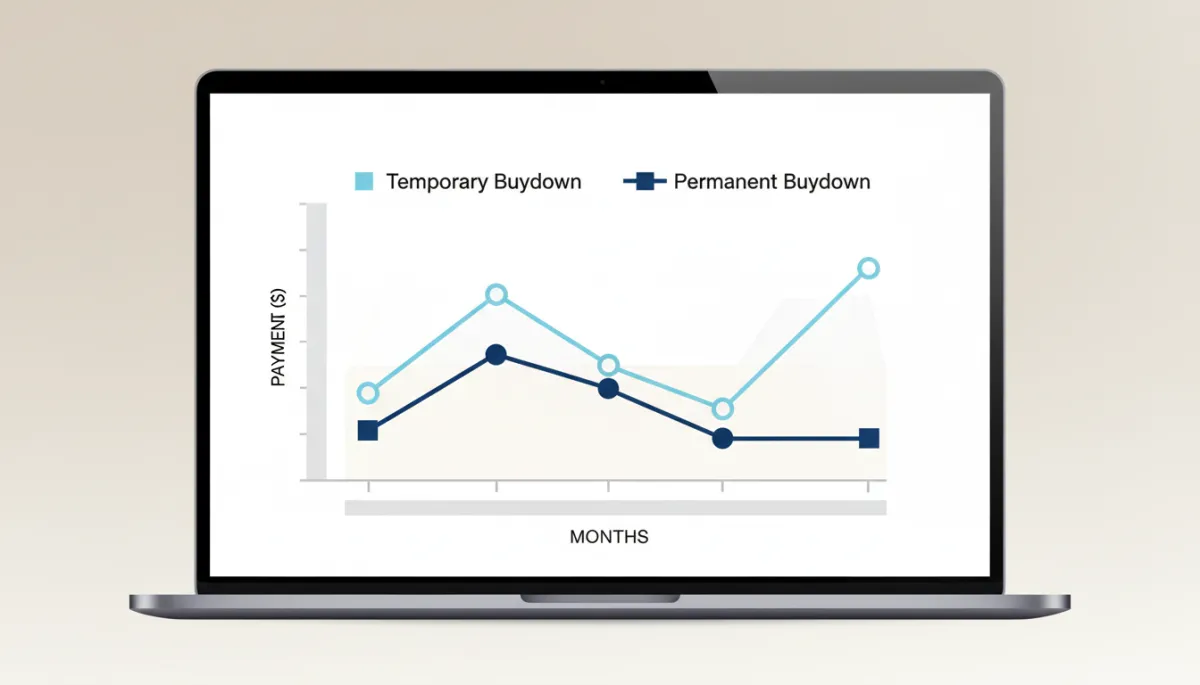
Comparing a temporary buydown and a permanent buydown helps reveal your true long-term savings.
Temporary vs Permanent Buydowns: Which Buydown Fits Your Situation?
Now for the big question: when does a temporary buydown make more sense, and when is a permanent buydown the smarter play? The answer really comes down to your timeline, your cash, and your comfort level with future payments.
A temporary buydown can be great if you expect your income to rise, plan to refinance, or just want breathing room during the first few years of homeownership.
A permanent buydown is usually better if you plan to keep the mortgage for a long time and want to lock in predictable, lower payments for the life of the loan.
📌 Key Takeaway: Use a temporary buydown for short-term affordability, and a permanent buydown for long-term interest savings.
Pros and Cons of Each Type of Buydown
To give you real value, let’s lay out the main pros and cons of each buydown option in plain language so you can quickly see what might fit you best.
Temporary Buydown Pros
Lower payments when you need it most – Those early years often come with new furniture, moving costs, and life changes. A temporary buydown eases that pressure.
Often funded by the seller or builder – In a slower market, it’s common for sellers to offer a buydown instead of a price cut.
Buys time to refinance – If you believe rates may drop, a temporary buydown can bridge the gap until you refinance into a lower permanent rate.
Temporary Buydown Cons
Payment shock risk – If you’re not prepared, the jump to the full payment after the buydown period can feel jarring.
Short-term benefit only – You’re not lowering the total interest over the full 30 years; you’re just spreading it differently.
Permanent Buydown Pros
Long-term interest savings – A lower rate for the life of the loan can save tens of thousands of dollars over time.
Predictable payment – No step-ups or surprises; your payment stays consistent (aside from taxes and insurance changes).
Permanent Buydown Cons
Higher upfront cost – You need more cash at closing, which can be tough if you’re already stretching for the down payment and closing costs.
Break-even risk – If you sell or refinance too soon, you may not recoup the money you spent on the buydown.
How to Decide If a Buydown Is Worth It
When you’re comparing buydown options, focus on three big questions:
How long will I realistically keep this home and this loan? If you’re planning to move or refinance in a few years, a temporary buydown or no buydown at all might make more sense than paying for a permanent rate reduction.
Who is paying for the buydown? If the seller or builder is covering the cost, a buydown can be a powerful way to improve your monthly payment without draining your own savings.
What does the break-even math look like? Your lender can run a side-by-side comparison to show how long it takes for a permanent buydown to pay for itself.
SEO-Friendly Tips: Page Speed, Mobile Experience, and Schema (In Plain English)
Since you might be reading this as a homeowner and a website owner, let’s quickly touch on how this buydown content should live on a site. For fast page speed (under about three seconds), keep images compressed, limit heavy scripts, and use clean code. A fast-loading buydown guide not only feels better for readers, it’s also a positive signal for search engines.
Make sure the page is fully mobile-friendly too. Most people will research “mortgage buydown” on their phone while they’re on the couch. That means large, readable text, tap-friendly buttons, and no awkward horizontal scrolling.
Finally, you can add schema markup (structured data) to help search engines understand that this is an in-depth article about temporary vs permanent buydowns. Using Article schema or HowTo schema can improve visibility and click-throughs for your buydown content.
Helpful Resources and Further Reading on Buydowns
If you want to go deeper on mortgage strategy beyond just the buydown decision, check out these related guides:
How Mortgage Rate Buydown Strategies Can Lower Your First-Year Payments
Fixed vs. Adjustable-Rate Mortgages: Which Works Best with a Buydown?
Closing Costs Explained: Where a Buydown Fits Into Your Cash to Close
For neutral, third-party information on interest rate buydowns and discount points, you can also visit: Consumer Financial Protection Bureau (CFPB) and Freddie Mac’s Homebuyer Resources .
Quick Summary: Temporary vs Permanent Buydowns in a Nutshell
To wrap it all up, here are the key points about using a buydown on your mortgage:
A buydown lowers your interest rate by paying extra money upfront, either temporarily or permanently.
Temporary buydowns (like a 2-1 buydown) reduce your payment for the first few years, then your rate jumps to the full note rate.
Permanent buydowns use discount points to lower your rate for the entire life of the loan, often saving more total interest if you keep the loan long enough.
The “right” buydown depends on your timeline, who is paying for it, and how the break-even math looks for your specific situation.
Ready to Talk Through Your Buydown Options?
If you’re still unsure whether a temporary or permanent buydown is right for you, that’s completely normal—this is a big decision, and the numbers can feel overwhelming when you’re staring at them alone. I’m happy to walk you through your specific scenario, compare each type of buydown side by side, and help you choose the option that actually supports your long-term goals, not just the lowest payment today.
Contact me at (925) 722-6116 or [email protected] with any questions about buydowns, rates, or your next home purchase. There’s no pressure, just a straightforward conversation about what makes the most sense for you, your budget, and your future plans.