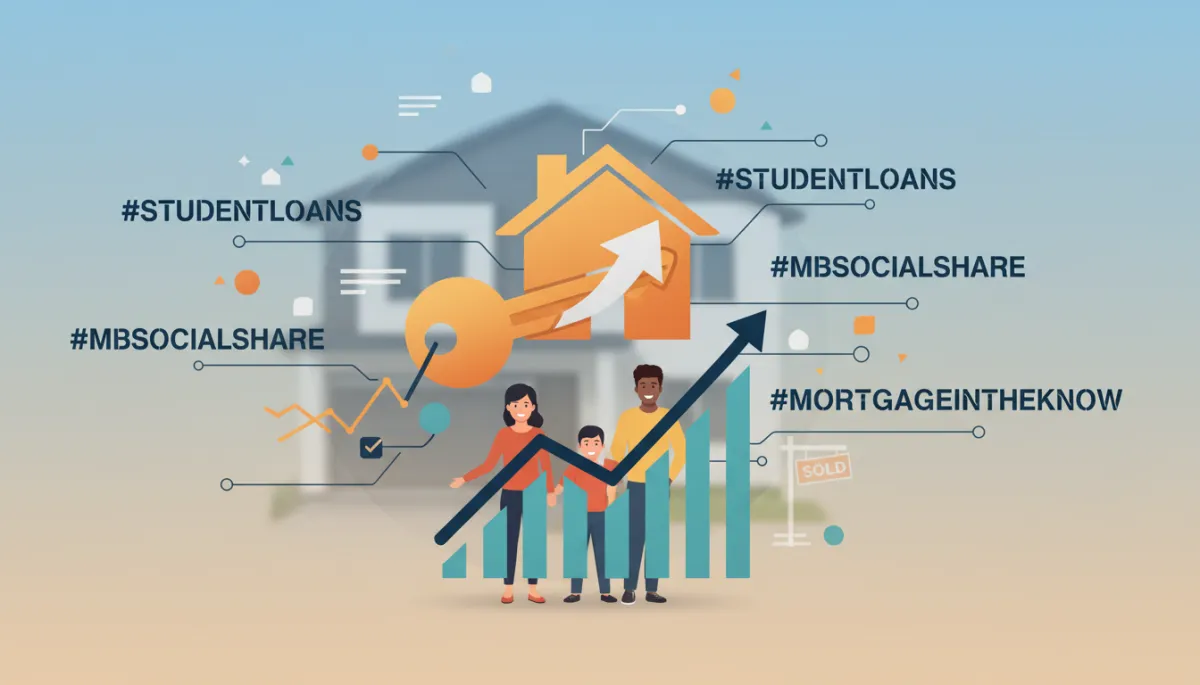
Student Loans & Homeownership: Debunking Myths
Homeownership, Student Loans, Mortgage Education
Student Loan Debt and Homeownership: Why “I Owe Too Much” Is Often a Myth
Many people assume that having student loan debt automatically puts homeownership out of reach. In reality, lenders look at your overall financial picture—not just your loan balance—to decide if you qualify. Understanding how they evaluate factors like debt-to-income ratio, credit history, and income stability can reveal that you may be closer to buying a home, building equity, and creating long-term wealth than you think. #studentloans #mbshighway #mbssocialshare #mortgagemarketnews #mortgageintheknow
How Lenders Really Assess Your Overall Financial Health
When you apply for a mortgage, lenders are not simply asking, “How much student debt do you have?” Instead, they focus on how comfortably you can manage a new monthly payment alongside your existing obligations. They evaluate your overall financial health using several key components that work together like pieces of a puzzle:
Your debt-to-income ratio (DTI) – how much of your monthly income goes to debt payments.
Your credit history and score – how reliably you have managed credit over time.
Your income level and stability – how predictable and sufficient your earnings are.
Student loans are just one part of this picture. A well-managed loan with on-time payments can even help demonstrate financial responsibility, rather than hurt you.
Debt-to-Income Ratio: The Number Lenders Watch Closely
Your debt-to-income ratio compares your total monthly debt payments—student loans, car loans, credit cards, and the proposed mortgage—to your gross monthly income. Most lenders prefer your total DTI to fall within a certain range, often somewhere around the low-to-mid 40% range or lower, depending on the loan program and other strengths in your profile.
This means that even if your student loan balance feels large, what matters most is the monthly payment relative to your income. Income-driven repayment plans, consolidation, or refinancing can sometimes lower that payment and improve your DTI, making homeownership more achievable than you may expect. #mortgageintheknow #mortgagemarketnews
Credit History: Turning Student Loans into a Positive
Lenders also pay close attention to your credit history. They want to see that you borrow responsibly and pay on time. Consistent, on-time student loan payments can actually help build a strong credit profile. Late payments, high credit card balances, or collections are usually more concerning than the simple fact that you have student debt.
Improving your credit may be as simple as making every payment on time, paying down revolving credit card balances, and avoiding new unnecessary debt in the months leading up to your mortgage application. These steps can boost your score and may even help you qualify for a better interest rate, despite your student loans. #studentloans #mbshighway
Income Stability: Why Your Career Path Matters More Than Your Degree Cost
Another major factor is income stability. Lenders look at how long you have been in your job or field, your employment type, and the likelihood that your income will continue. A steady paycheck, a history of consistent hours, or a reliable salary can offset concerns about student debt because it shows you have the means to keep up with your mortgage payment over time.
Even if you are early in your career, your education and field can work in your favor. A growing income trajectory, recent promotions, or a strong industry outlook can all support your case as a responsible, long-term homeowner in the eyes of a lender.

Many buyers discover their income and payment history put them closer to approval than expected.
Why Many Buyers Are in a Stronger Position Than They Think
It’s common for future buyers with student loans to underestimate their readiness. They focus on the total amount owed and assume lenders will do the same. But once a professional reviews their income, DTI, credit, and employment, many are pleasantly surprised to learn they already qualify—or are just a few simple steps away from qualifying—for a home loan that fits their budget.
💡 Pro Tip: Before ruling yourself out, connect with a knowledgeable mortgage professional who can run the numbers using real guidelines, not assumptions. #mbssocialshare #mortgageintheknow
Smart Strategies for Homebuyers with Student Loans
If you carry student loans, you can still successfully purchase a home by being intentional about your finances. Consider these strategies:
Optimize your student loan payment. Explore repayment plans that lower your required monthly payment, which may improve your DTI while still keeping you on track.
Pay down high-interest revolving debt first. Reducing credit card balances can quickly boost your credit score and free up monthly cash flow.
Choose a realistic price range. Work with your lender to find a comfortable payment, then shop for homes that keep your DTI in a healthy range.
Build a solid savings cushion. A reasonable down payment and emergency fund can make you more confident and resilient as a new homeowner.
Using Homeownership to Build Equity and Long-Term Wealth
Buying a home while you still have student loans is not just possible—it can be a powerful step toward your long-term financial stability and wealth. Each mortgage payment you make typically increases your home equity, especially as you pay down principal and as property values grow over time. Equity becomes a valuable asset that can support future goals, from funding renovations to strengthening your retirement picture.
Instead of waiting years to be “completely debt-free,” many buyers choose to balance student loan repayment with responsible homeownership. By doing so, they give themselves time in the market, allowing equity and potential appreciation to work in their favor. When paired with a thoughtful budget and consistent saving, this approach can create a strong foundation for long-term financial health. #studentloans #mbshighway #mortgagemarketnews
The Bottom Line: Don’t Let Student Loans Decide Your Future
Student loan debt does not automatically disqualify you from owning a home. Lenders look at your entire financial story—your debt-to-income ratio, credit history, and income stability—to understand how well a mortgage fits into your life. With the right guidance and a few strategic moves, you may discover you are in a much stronger position than you ever imagined to purchase a home, build equity, and move confidently toward lasting financial stability and wealth. #mbssocialshare #mortgageintheknow