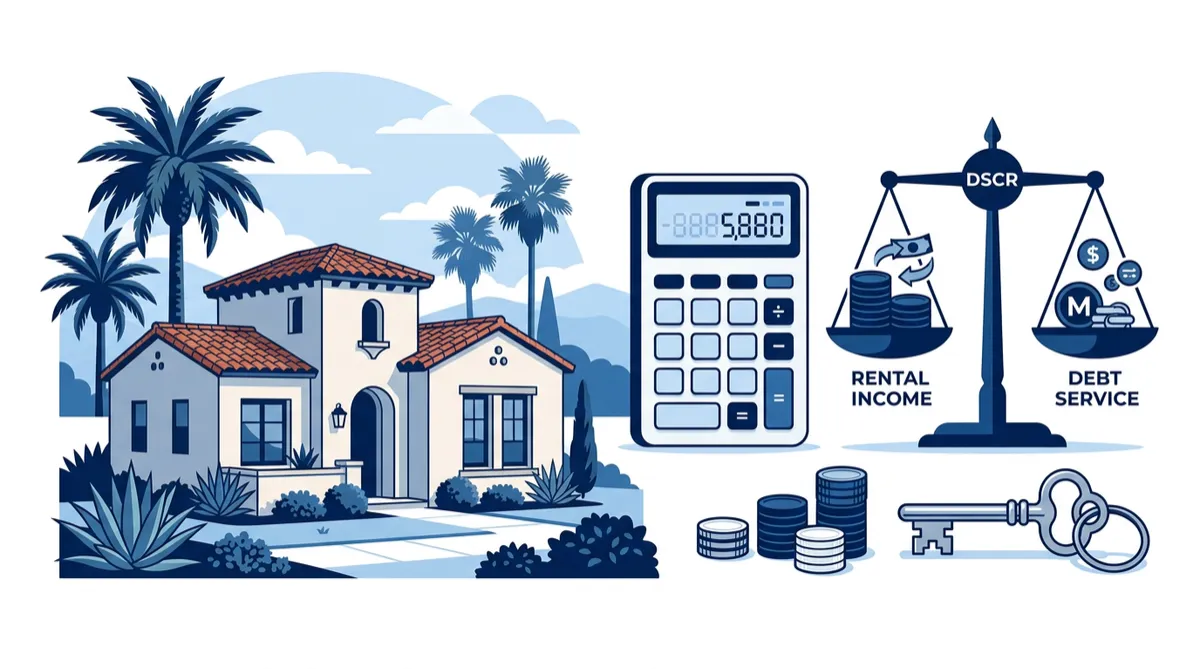
What Is a DSCR Loan and How Does It Work?
If you've been looking at rental properties in California, you've probably run into a frustrating reality: traditional mortgages are built around your personal paycheck. That works great if you have a W-2, but it can be a real roadblock if you're self-employed, own several properties, or write off a lot of expenses. That's where the DSCR loan comes in. It lets the property do the talking instead of your tax returns. Let's break down what it is, how it works, and whether it might fit your next deal.
What Is a DSCR Loan?
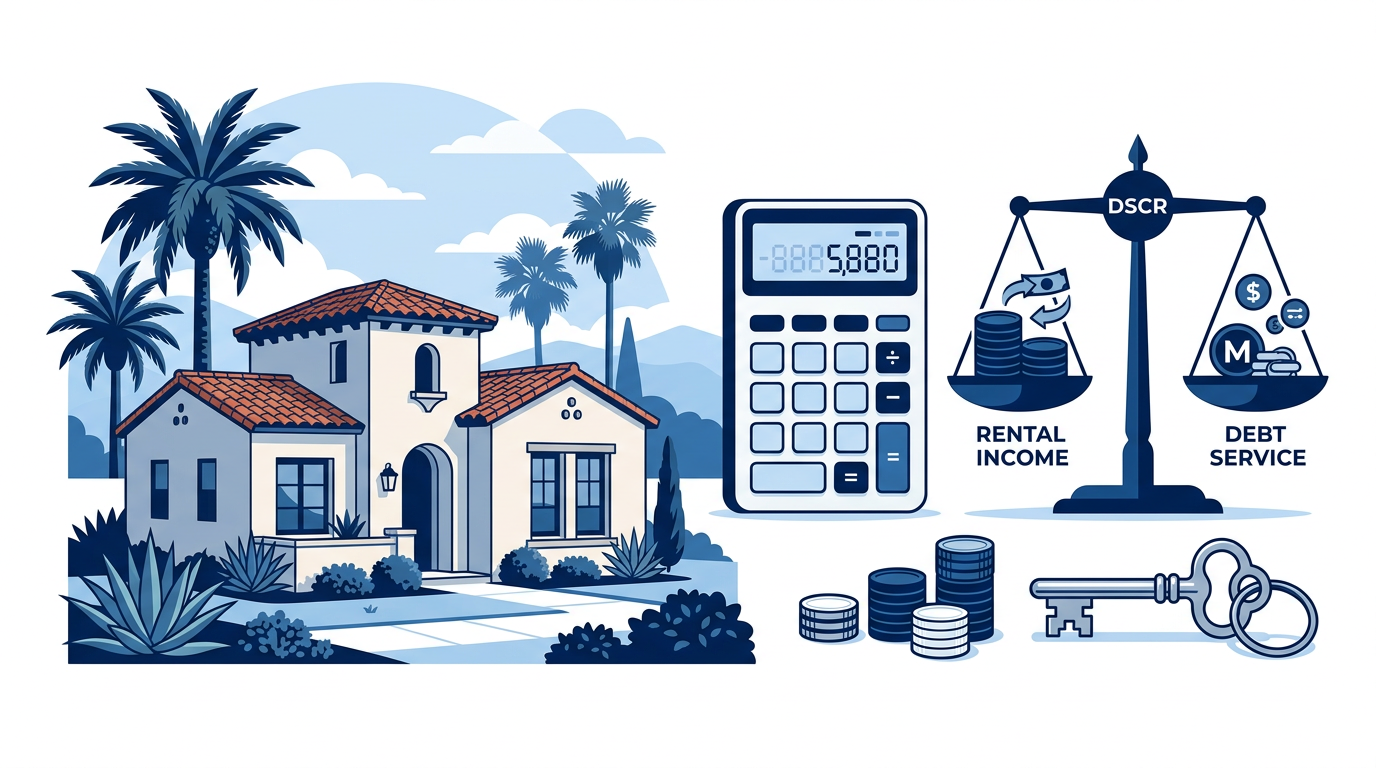
DSCR stands for Debt Service Coverage Ratio. A DSCR loan is an investment property mortgage where approval is based mainly on whether the property's rental income can cover its monthly housing costs. Instead of asking for W-2s, pay stubs, and two years of tax returns, the lender looks at the rent the property earns (or is expected to earn) compared with what it costs to carry.
Because of that, DSCR loans are often grouped under "non-QM" (non-qualified mortgage) or "investor cash-flow" programs. They're designed for business-purpose borrowing, which means they're for rentals, not for the home you plan to live in.
How Is the DSCR Calculated?
The math is simple. Divide the property's gross monthly rental income by its monthly housing payment, often called PITIA: principal, interest, taxes, insurance, and any HOA dues.
DSCR = Monthly Rental Income ÷ Monthly PITIA
Here's a quick example. Say you're buying a duplex in the Sacramento area that rents for a combined $4,000 a month. Your total monthly payment (principal, interest, taxes, insurance, and HOA) comes to $3,200.
- $4,000 ÷ $3,200 = 1.25 DSCR
A ratio of 1.0 means the rent exactly covers the payment. Above 1.0, the property produces positive cash flow. Below 1.0, you'd be covering part of the payment out of pocket. Lenders typically like to see 1.0 or higher, and a stronger ratio, such as 1.25 or above, can help you qualify for better pricing. Some programs allow a ratio below 1.0 with a larger down payment or higher rate.
To estimate rent, lenders usually order an appraisal with a rent schedule. If the property is already leased, they may use the actual lease, too. Short-term rentals can sometimes qualify using projected income reports, depending on the program.
Typical DSCR Loan Requirements
Every lender and program is a little different, but here's what borrowers commonly see:
- Down payment: Often 20% to 25% for a purchase, with more required for lower DSCR ratios or lower credit scores.
- Credit score: Many programs start around 660 to 680, with the best pricing reserved for 740 and above.
- Reserves: Expect to show several months of mortgage payments in the bank after closing.
- Property types: Single-family rentals, condos, townhomes, and often 2-4 unit properties.
- Documentation: No personal income verification, though you'll still provide ID, bank statements, and entity documents if closing in an LLC.
- Loan terms: 30-year fixed and interest-only options are common, along with adjustable-rate choices.
Why Investors Like DSCR Loans
The biggest benefit is flexibility. If your tax returns show low net income because of legitimate write-offs, a conventional lender may not count the income you actually earn. A DSCR loan sidesteps that issue. Other advantages include:
- Faster, simpler underwriting with far less paperwork.
- Easier scaling. Because your personal debt-to-income ratio isn't the focus, it can be easier to add properties to your portfolio.
- LLC-friendly closings. Many programs let you hold title in an entity for liability and estate planning purposes.
- Self-employed friendly. Business owners, contractors, and commission-based earners can qualify without proving personal income.
What to Watch Out For
DSCR loans are a great tool, but they're not free of trade-offs. Go in with your eyes open:
- Higher rates and costs. Rates are usually higher than conventional investment loans because the lender takes on more risk.
- Prepayment penalties. Many programs include one for the first three to five years. If you plan to sell or refinance early, ask about it up front.
- Larger down payment. You'll typically put down more than you would on a primary residence.
- Tight cash flow can limit options. In high-cost markets, rent may not cover the payment at a 20% down payment, so you may need to adjust the price, down payment, or loan structure.
How DSCR Loans Play Out in California
California is a market where DSCR math deserves extra attention. Purchase prices are high relative to rents in many coastal and Bay Area cities, which can push the ratio below 1.0. On the other hand, inland markets such as the Central Valley, Sacramento, and parts of the Inland Empire often show stronger rent-to-price ratios, making it easier to hit a healthy DSCR.
Property taxes and insurance also matter. Since both are part of PITIA, rising homeowners insurance premiums can quietly shrink your ratio. Always run the numbers with realistic, up-to-date insurance quotes, not guesses. A few hundred dollars a month can be the difference between a 1.05 and a 1.25.
Tips for Real Estate Professionals
If you're a Realtor or agent working with investor clients, understanding DSCR financing gives you a real edge. You can help buyers screen properties faster by asking for expected rent and an estimated payment before they write an offer. Investors appreciate an agent who can say, "Let's check the DSCR on this one first." It saves time, avoids surprises during underwriting, and can make your offers stronger because your buyer's financing is more predictable.
Is a DSCR Loan Right for You?
A DSCR loan may be a good fit if you're a self-employed investor, you're growing a rental portfolio, or your tax returns don't tell the full story of your income. It may not be ideal if you plan to flip a property in a few months, or if you qualify comfortably for a conventional investment loan with a lower rate.
The best way to know is to run the numbers on a specific property. If you're considering a rental purchase or refinance in California, reach out to Kurt Kessler for a no-pressure conversation. Bring the address, the expected rent, and your goals, and we'll walk through the DSCR together and map out your options.
This article is for general educational purposes only and is not a loan commitment or financial advice. Rates, terms, and program availability vary by lender and borrower qualifications. Kurt Kessler, Mortgage Broker, NMLS #365130.