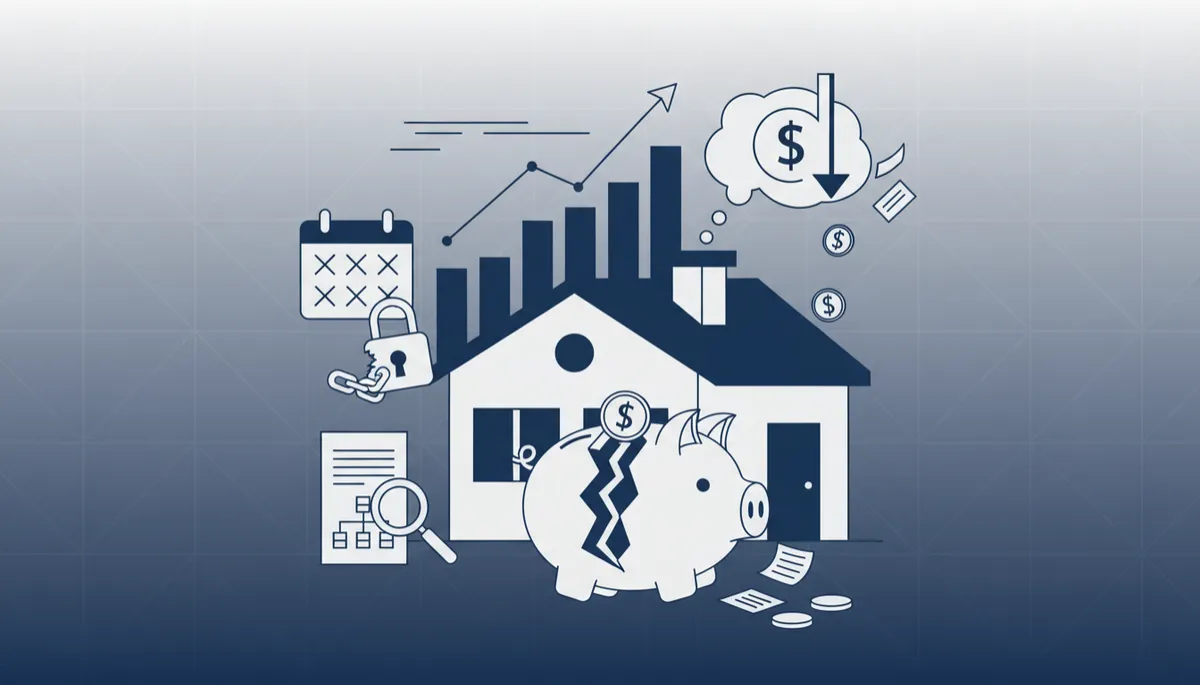
What Are the Downsides of an FHA Loan?
Mortgages, FHA Loan Downsides, California Home Buying
What Are the Downsides of an FHA Loan?
FHA loans can be a fantastic doorway into homeownership, especially in a high-cost state like California. But they’re not perfect for everyone. If you’re a California home buyer or a real estate agent helping clients write competitive offers, it’s important to understand the FHA loan downsides just as clearly as the benefits—so you can choose the right path, not just the easiest one today.

Quick Reality Check: FHA’s Upsides (So We’re Being Fair)
First, a quick nod to why FHA loans are so popular. They allow low down payments (as little as 3.5%), flexible credit guidelines, and they’re often more forgiving if you’ve had a past credit event. In a market where California’s median home price hovers around $900,000, according to the California Association of REALTORS® (C.A.R.), that flexibility can feel like a lifeline.
But every loan program has strings attached. With FHA, those strings usually show up in the form of FHA mortgage insurance, loan limits, property rules, and how your offer looks to a seller. Let’s walk through the main downsides in plain English, with a California focus, so you and your clients can make confident decisions.
1. Upfront and Annual FHA Mortgage Insurance: The Cost That Sticks Around
FHA loans come with two layers of mortgage insurance premiums (MIP), and they’re not optional. As of 2026, the upfront MIP is 1.75% of the base loan amount, typically financed into the loan at closing (HUD, answers.hud.gov). On a $600,000 loan, that’s $10,500 added to your balance right out of the gate.
Then there’s the annual MIP, paid monthly. For most 30-year FHA loans in 2026:
- LTV ≤ 90%: about 0.50% per year, charged for 11 years.
- LTV > 90% and ≤ 95%: 0.50% per year, for the life of the loan.
- LTV > 95%: 0.55% per year, also for the life of the loan.
In practical terms, that means a higher monthly payment compared with a conventional loan at the same rate—often a noticeable difference in California price ranges. Over time, that adds up to a meaningful cost gap.
2. No MIP Cancellation with Less Than 10% Down
With a conventional loan, private mortgage insurance (PMI) can usually be removed once you reach about 20% equity. FHA plays by different rules. If you put less than 10% down on your FHA loan, the annual MIP is charged for the entire life of the loan, no matter how much equity you build, unless you refinance out of FHA later.
If you put 10% or more down, MIP can fall off after 11 years, which is better—but many California buyers using FHA are closer to the minimum 3.5% down, especially first-time buyers. You’re not just choosing a lower down payment; you’re also choosing a long-lasting monthly cost.
“FHA can be a great starter loan—as long as you have a clear exit or refinance plan.”
3. FHA Loan Limits in California: Great in Some Counties, Tight in Others
Another key downside of an FHA loan California buyers face is the loan limit. FHA sets a national “floor” and “ceiling,” then each county lands somewhere in between based on local prices. For 2026, HUD’s Mortgagee Letter 2025-23 sets:
- Floor (low-cost areas): $541,287 for a one-unit home.
- Ceiling (high-cost areas): $1,249,125 for a one-unit home.
Many of California’s hottest markets—Los Angeles, Orange, Alameda, Contra Costa, Marin, San Francisco, San Mateo, Santa Clara, Santa Cruz, and San Benito—enjoy the maximum ceiling of $1,249,125. That helps, but it doesn’t always keep up with luxury or even mid-range prices in certain neighborhoods.
Other counties sit at the floor of $541,287 (like Amador, Butte, Calaveras, and Colusa), which can make FHA tough to use if prices in your area are well above that. Some fall in the middle—El Dorado County, for example, is at $764,750. If the median price in your county is near or above the FHA cap, the loan limit itself becomes a downside because it simply may not buy enough house.
4. Property Condition and Appraisal Requirements
FHA appraisals are not just about value; they also include a basic health-and-safety check. The property has to meet FHA’s minimum standards—things like peeling paint, missing handrails, exposed wiring, or a roof at the end of its life can all trigger required repairs before closing.
In California, where older housing stock is common and “as-is” listings show up a lot, this can be a real hurdle. A seller who doesn’t want to fix anything may skip FHA offers altogether. For buyers, that means fewer properties to choose from and potentially more back-and-forth over repairs once the FHA appraisal report comes in.
5. Credit and Debt-to-Income: Flexible, But Not a Free Pass
One reason FHA is attractive is that it can work with lower credit scores and higher debt-to-income (DTI) ratios than many conventional programs. But that flexibility has trade-offs. Higher DTI combined with ongoing MIP can stretch a buyer’s budget thin—especially in a state where property taxes, insurance, and HOA dues can already be substantial.
For agents, this matters when you’re trying to keep a client’s payment comfortable over the long haul. Just because FHA’s automated system approves a higher DTI doesn’t mean it’s the healthiest financial move, particularly in a market that can be volatile on taxes, insurance, and maintenance costs.
Aim for a payment that still feels manageable if taxes, insurance, or HOA dues rise over time.
6. How Sellers View FHA Offers in Competitive Markets
In a multiple-offer situation, the type of financing can influence which offer rises to the top. Many California listing agents and sellers still perceive FHA as “more hassle” because of stricter appraisal and property condition requirements, plus potential delays if repairs are needed or if the appraiser calls out issues.
That perception—fair or not—can put an FHA buyer at a disadvantage against a similar conventional buyer, even if the FHA offer is slightly higher in price. In a hot neighborhood or on a turnkey property, that can be a real downside of using FHA financing instead of a conventional loan or strong down payment assistance structure.
7. When Conventional, CalHFA, or Other Options May Be a Better Fit
FHA is one tool in the toolbox, not the toolbox itself. In many California scenarios, a conventional loan, a CalHFA program, or a combination of options can be stronger overall than FHA, even if FHA looks easier at first glance.
- If your credit score is solid (often mid- to high-600s and above), a conventional loan may offer a similar or better rate, with PMI that can be removed once you hit 20% equity—avoiding lifetime MIP costs.
- If you’re short on funds for closing, CalHFA down payment assistance or closing cost programs can sometimes pair with conventional financing, giving you competitive terms while still keeping cash-to-close manageable.
- If you’re buying in a price range above local FHA loan limits, a high-balance or jumbo conventional loan may be the only way to reach the properties you really want.
The “best” loan isn’t universal—it depends on your credit, income, price point, location, and how long you plan to stay in the home. That’s where running side-by-side comparisons becomes crucial.
Putting It All Together: Is FHA Still Worth Considering?
Despite the downsides—extra mortgage insurance, loan limits, property rules, and seller perception—FHA loans still help many Californians become homeowners who otherwise might be stuck renting. The key is to go in with eyes wide open. For some buyers, FHA is a smart “first step” loan with a plan to refinance into conventional later. For others, starting with conventional or CalHFA from day one makes more sense.
The right move isn’t “FHA vs. conventional” in general—it’s which strategy best supports your long-term plans in California.
Talk Through Your Options with a Local Expert
Every buyer and every property is different—especially in a state as varied as California. If you’d like to see how an FHA loan stacks up against conventional, CalHFA, or other options for your exact price range and county, reach out to:
Kurt Kessler, California Mortgage Broker (NMLS #365130) Kurt can walk you through a personalized scenario, compare payments and cash-to-close, and help you choose the strategy that fits your goals—not just for getting the keys, but for building long-term financial stability in California’s evolving housing market.
Meta Title: What Are the Downsides of an FHA Loan? | California FHA Guide by Kurt Kessler
Meta Description: Learn the key FHA loan downsides for California buyers: FHA mortgage insurance, loan limits, property rules, seller perceptions, and when conventional or CalHFA options may be a better fit. Insights from California mortgage broker Kurt Kessler, NMLS #365130.